How Do Clear Aligners Straighten Teeth?
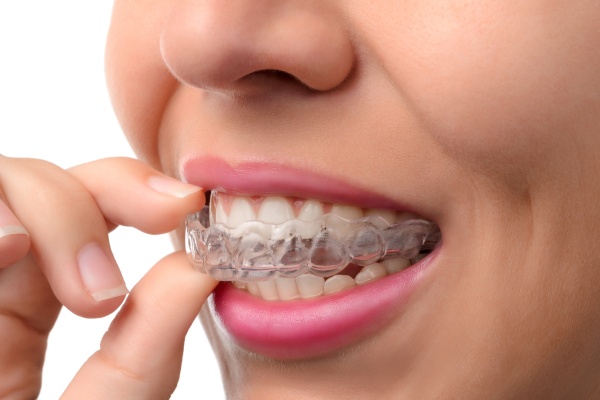
Thinking about choosing clear aligners to straighten your teeth? Whether you have minimally crooked teeth or very crooked teeth, choosing a straightening option is a good idea as a healthy mouth is one that has straight teeth. When your teeth are straight, you not only get the benefit of having a pleasant-looking smile, it is also easier for you to take care of your oral health.
What are clear aligners?
Finding out what clear aligners are is necessary as this allows you to understand whether or not this teeth straightening option is the right choice for you. Also called invisible braces, clear aligners use a custom-tray system in order to straighten your teeth. This aligner system requires you to wear a certain amount of aligner sets, which is dependent on how crooked your teeth are. These aligners are custom-made for you, which means that this is a personalized treatment option for straightening your teeth.
How clear aligners straighten teeth
The information below is on the topic of how clear aligners work in order to straighten a dental patient's teeth.
They are custom-made for every patient
Every patient who sees a dental professional in order to get their clear aligners can expect their aligners to be custom-made for them. This means dental patients can expect their aligners to fit comfortably, which is an important feature for patients who want straighter teeth. While generic clear aligners can be bought over the counter, these should be avoided as they are not custom-made.
They slowly move teeth into their ideal positions
Custom-made aligners are specifically designed to slowly move teeth into their ideal positions, just like traditional braces. The aligners straighten teeth by applying just the right amount of force to rotate the teeth into their proper positions. Each set of aligners need to be changed out about every two weeks, as this continues the teeth straightening process. Once all of the sets of aligners have been used, the straightening process has been completed.
Wearing a retainer to keep teeth straight
Once a dental patient has undergone the straightening process, it is necessary for them to wear a retainer in order to keep their teeth in their straight positions. Every patient will receive instructions from their dental professional when it comes to how long they need to wear their retainer, which will differ with each patient. Patients are required to wear the retainer more often in the beginning and then can expect to gradually wear them less over time.
Are clear aligners the right teeth straightening option for you?
Now that you know how clear aligners can straighten your teeth, is this the right straightening option for you? When you decide to straighten your teeth, you will get to smile with confidence every single time. Because it is easier to take care of your oral health when your teeth are straight, you also get the benefit of having a healthier mouth.
Are you considering clear aligners in the Sharon area? Get more information at https://dentistryonpark.com.
Check out what others are saying about our services on Yelp: Read our Yelp reviews.
Recent Posts
Gneuromuscular dentistry focuses on improving bite alignment, jaw function, and muscle balance to support comfortable, healthy oral movement. When the teeth do not meet evenly, the jaw muscles may work harder during chewing, speaking, and swallowing. A general dentist trained in this approach evaluates the teeth, muscles, nerves, and jaw joints to find the source…
An implant dentist often provides crucial support when a dental implant sustains damage that could lead to infections, misalignment, or even jawbone deterioration. An immediate response can preserve oral health and maintain the long-term stability of a restoration. Delaying care can lead to more involved procedures and potentially compromise oral function. Below are the critical…
An implant dentist provides a reliable and long-lasting solution for missing teeth through dental implants. This process involves multiple steps to ensure the implant integrates successfully with the jawbone, providing a stable foundation for a natural-looking restoration. Understanding each stage of the dental implant process helps patients feel confident in their treatment plan and long-term…
Of the many treatments available to replace missing teeth, dental implants are relatively recent and also very common. Tooth loss, whether from trauma or severe decay, can impact appearance and undermine a beautiful, confident smile. With a metal rod inserted into the jaw like the roots of the tooth and a prosthesis shaped like the…